
The 360° Field of View: Understanding Equine Vision
What horses see, and why it matters for every field veterinarian
A client calls with an anxious question: their performance horse has been spooking at shadows, reluctant to load into the trailer, and increasingly head-shy during tacking. Before reaching for the behavior modification playbook, there’s a fundamental question worth asking: what can this horse actually see?
Equine vision is remarkably different from our own, and understanding those differences is the foundation of effective ocular evaluation in the field.
The Prey Animal’s Panorama
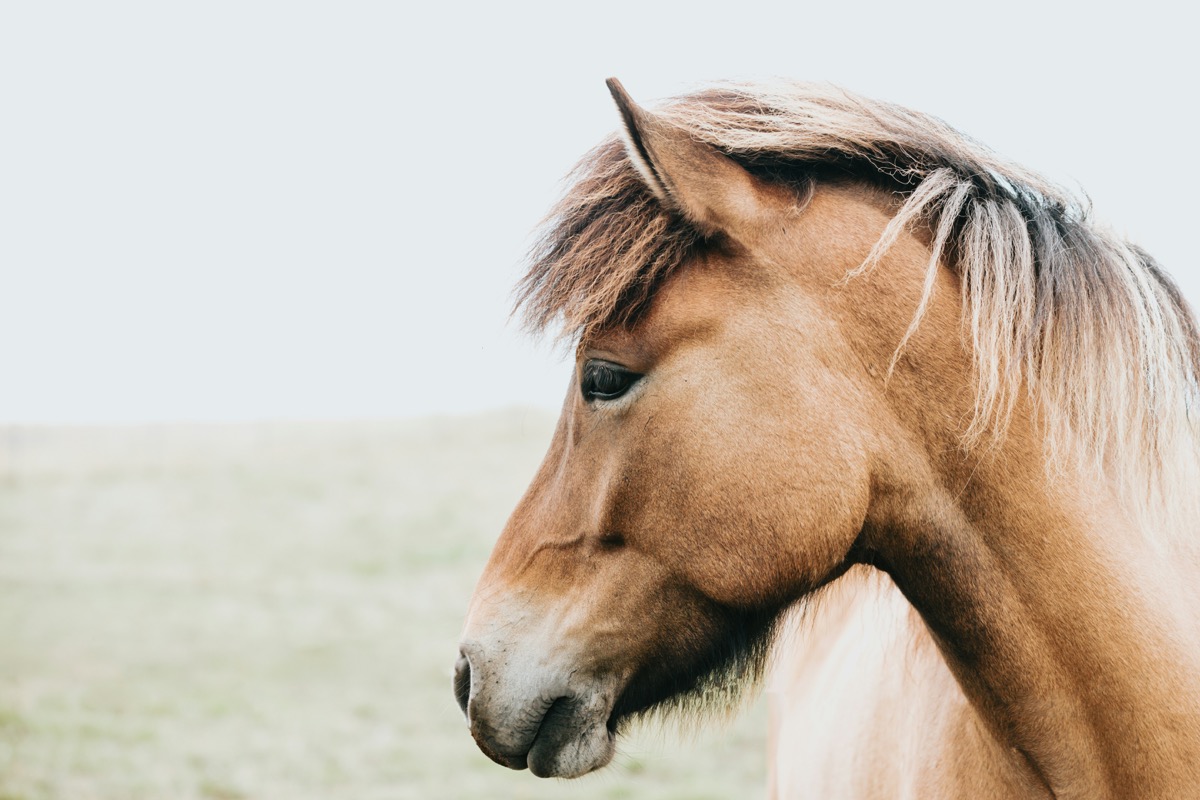
Horses evolved with a nearly 360-degree visual field, with their laterally positioned eyes providing almost complete environmental monitoring at all times.¹ This is pure prey animal adaptation: the horse that spots the predator first is the horse that survives.
But this panoramic view comes with trade-offs. Horses have only a narrow binocular visual field oriented down the nose. Research has confirmed that binocular overlap is directed downward, with a blind area directly in front of the forehead.² This is why, as Dr. Rachel Allbaugh (DVM, DACVO) explains, “if something grabs their attention, they’re going to turn and bring that into the binocular visual field so that they can study it.”
Those two blind spots? Directly behind the tail and directly beneath the nose. This explains why experienced handlers approach from the shoulder, and why horses sometimes startle when you appear suddenly in their peripheral-to-blind transition zone.
Better Than You Might Think
Here’s a statistic that surprises many practitioners: equine visual acuity ranges from approximately 20/30 to 20/60, with the best behavioral acuity measurements reaching 23.3 cycles per degree.³ Compare that to dogs (approximately 20/75)⁴ and cats (approximately 20/100), and horses emerge as the sharpest-eyed of our common companion and large animal species.
This acuity matters clinically. A horse with subtle corneal edema or early cataract formation isn’t just “getting by.” They’re experiencing meaningful degradation from what should be excellent baseline vision. The performance horse that suddenly refuses jumps or the trail horse that becomes anxious on unfamiliar terrain may be telling you something about their visual world.
“No Foot, No Horse,” but What About “No Eye”?
The equine industry has long recognized the primacy of hoof health. But as Dr. Allbaugh observes in her clinical practice, vision loss often triggers difficult conversations about a horse’s future.
“Clients are many times contemplating euthanasia when a horse does not have the visual capacity that they expect it to have,” she notes. The economics are stark: maintaining a 1,000 to 1,200 pound animal that can’t be ridden, shown, or safely handled represents a significant ongoing commitment.
This makes early detection and prevention all the more critical. The field veterinarian who catches equine recurrent uveitis before significant damage occurs, or who identifies the early stages of a squamous cell carcinoma on the third eyelid, isn’t just treating an eye. They’re potentially preserving years of useful life for that animal.
A Note on Accommodation
Unlike humans, who can adjust lens shape to focus at different distances, horses have minimal accommodative ability.¹ They rely more on head positioning to bring objects into focus. This is worth remembering when evaluating behavior that might seem visual in origin: a horse that raises or lowers its head repeatedly may be trying to find the focal sweet spot, not displaying a training issue.
Practical Takeaways
-
Approach matters. Understanding blind spots helps you (and your clients) handle horses more safely.
-
Visual acuity expectations should be high. Horses see well. When they don’t, it’s significant.
-
Eye exams aren’t optional. Make ocular evaluation a routine part of every wellness visit, not just a response to obvious problems.
-
Early intervention preserves options. Catching progressive conditions early can mean the difference between a manageable case and a crisis.
The eyes are the window to more than the soul. They’re the window to a horse’s quality of life and working future.
This article draws from the VetOnIt CE lecture “Introduction to Equine Ophthalmology” presented by Dr. Rachel Allbaugh, DVM, DACVO. Dr. Allbaugh is a board-certified veterinary ophthalmologist with extensive experience in equine ocular disease.
Want to go deeper? The Equine Excellence Series launching May 2026 includes comprehensive ophthalmology training with Dr. Allbaugh, covering everything from systematic field exams to advanced management of corneal, intraocular, and neuro-ophthalmic disorders. Join the waitlist for early access →
References
- Roberts SM. Equine vision and optics. Vet Clin North Am Equine Pract. 1992;8(3):451-457. doi:10.1016/s0749-0739(17)30435-2
- Harman AM, Moore S, Hoskins R, Keller P. Horse vision and an explanation for the visual behaviour originally explained by the ‘ramp retina’. Equine Vet J. 1999;31(5):384-390. doi:10.1111/j.2042-3306.1999.tb03837.x
- Timney B, Keil K. Visual acuity in the horse. Vision Res. 1992;32(12):2289-2293. doi:10.1016/0042-6989(92)90092-w
- Miller PE, Murphy CJ. Vision in dogs. J Am Vet Med Assoc. 1995;207(12):1623-1634.
- Gilger BC, ed. Equine Ophthalmology. 4th ed. Wiley-Blackwell; 2022.
- Allbaugh RA. Introduction to Equine Ophthalmology. VetOnIt CE Webinar, 2025.